

Enterprise Data Management
One golden record for securities, entities, products and risk across every system you run.
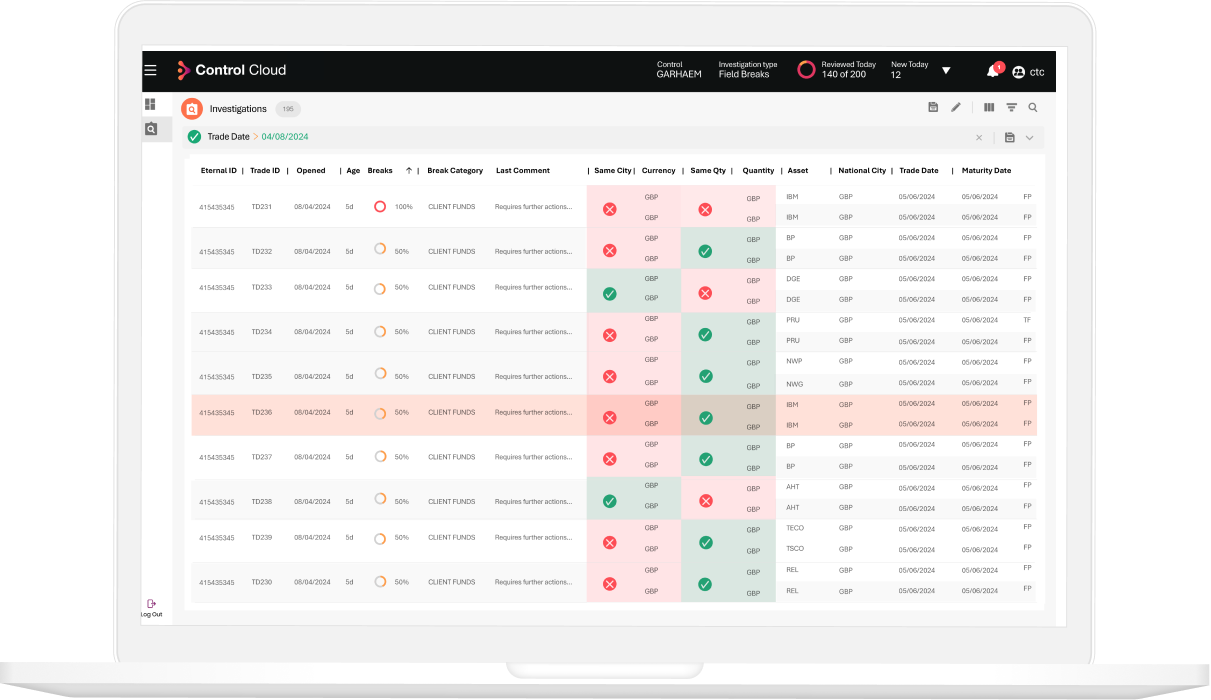
Gresham’s comprehensive array of reconciliation solutions deliver market leading match rates, leverage intelligent automation to streamline workflows and provide end-to-end visibility across your financial reporting environment.

Trusted by the world's leading financial institutions to process trillions of transactions per day, Gresham solutions are leading the way in data automation. Designed from the ground up to load, validate and match data of any complexity.
With over three decades of experience we have built industry leading products, customisable to your specific business requirements. No matter what part of your reconciliation process you are looking to improve, we have the solution for you.














-1.png)



Accelerate digital transformation without compromising on control
Fast track digital transformation surrounded by the experts
Industry leading data management solutions
Empowering Energy Companies
By Automating Data-Intensive Workflows
Tailored solutions that address your unique challenges and simplify complex data processes
Control risk with connected data across your entire finance ecosystem
Accelerate digital transformation without compromising on control
Bring all your data together automatically
Connect and ingest data in any format (CSV, flat files, SWIFT, ISO 20022, PDFs, and email attachments) without ETL tools or IT involvement, from various sources including internal systems, counterparties, custodians, brokers, banks, trading platforms, and external sources in real time or batch mode. Gresham automates the collection process across structured and unstructured formats, reducing operational dependency on manual uploads and fragmented workflows. Load data
Key capabilities:
Validate incoming data against configurable business rules to identify missing, duplicate, incomplete, or inaccurate records before they impact downstream processes. Automated controls improve confidence in reconciliation outcomes while reducing operational risk.
Key capabilities:
Use intelligent automation and AI-driven interpretation to normalise, enrich, and standardise data across multiple formats and counterparties. Gresham helps organisations build consistent reconciliation-ready datasets faster and with less manual intervention.
Key capabilities:
Apply advanced matching logic and machine learning to identify reconciled transactions quickly and accurately. Gresham continuously improves match performance by learning from historical outcomes and operational behaviour.
Key capabilities:
Automatically identify, categorise, and route unmatched items to the right teams for action. Intelligent exception management reduces investigation time and helps operations teams focus on the highest-risk and highest-value breaks first.
Key capabilities:
Provide operations teams with a centralised workspace to investigate, collaborate, and resolve reconciliation breaks efficiently. AI and pattern recognition help uncover recurring issues and accelerate remediation.
Key capabilities:
Distribute reconciliation results, insights, and exception reporting to internal stakeholders, regulators, counterparties, and management teams through automated reporting and dashboards.
Key capabilities:


